Serving Congolese
victims,
or exploiting them?
Congolese civilians are dying. Their suffering demands honest words, real justice, and money that actually reaches them. This site exposes what FONAREV and GENOCOST really are, and who truly benefits from them.
This site asks one simple question: Are FONAREV and GENOCOST truly serving the victims — or exploiting them?
“FONAREV spends more on its photocopiers than on its victims.”
An official from the ministry that oversees the fund
Raised
in the name of victims
Reached identified victims
Withdrawn in cash
by FONAREV executives
Spent on one ceremony
August 2, 2025
A non-negotiable reality
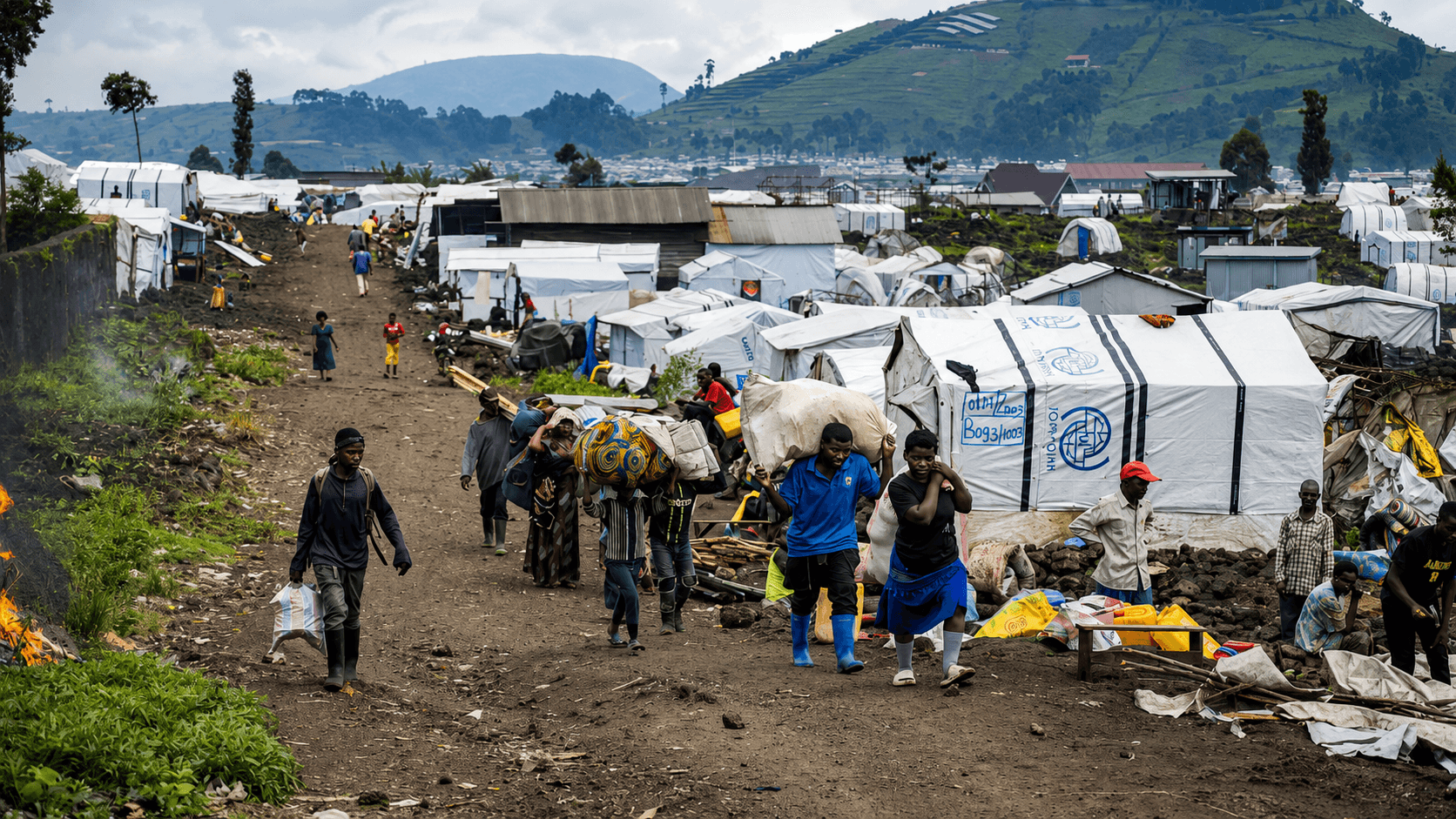
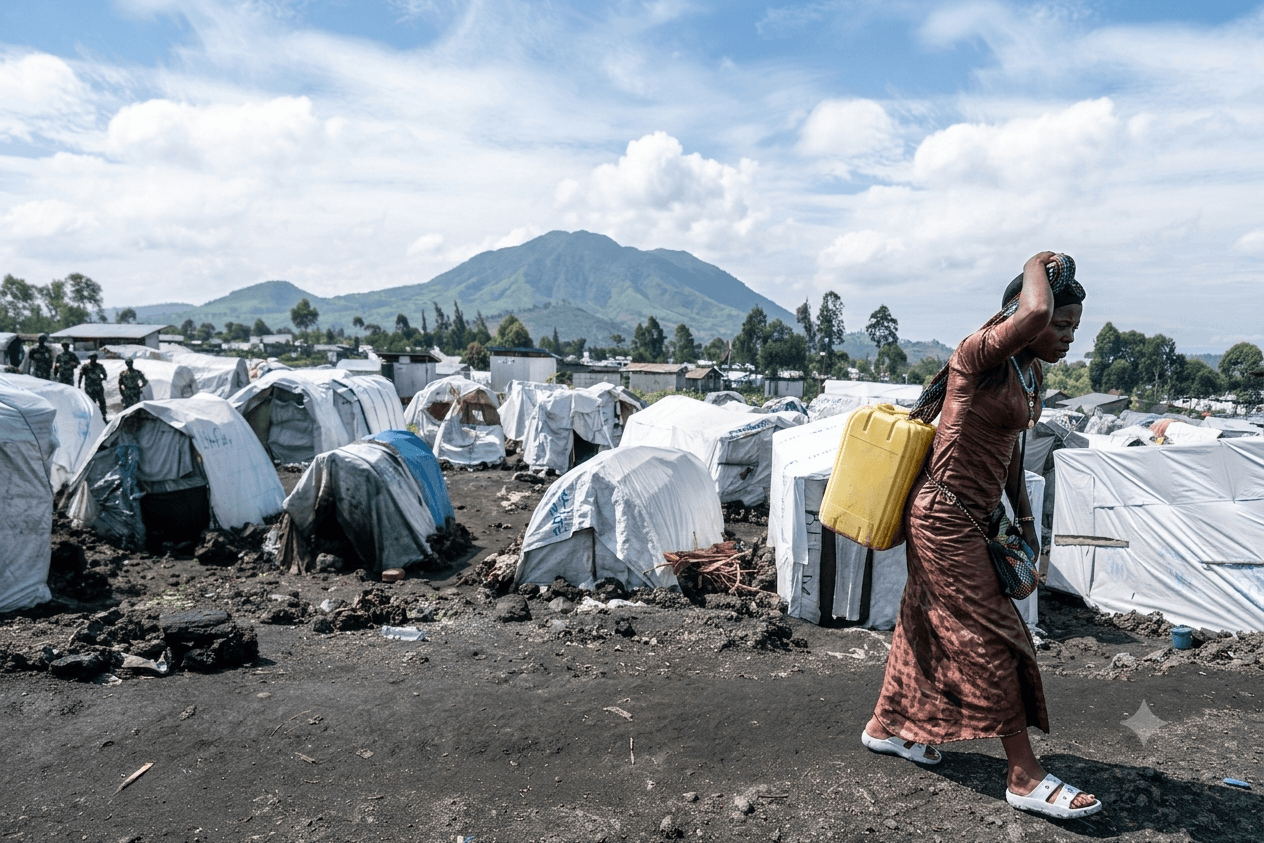
IDP camp, Goma, 2025
Men, women, and children were killed in North Kivu, South Kivu, Ituri, and beyond. Villages burned. More than seven million people fled their homes. This is not a position — it is a fact.
This site poses a single question: Are FONAREV and GENOCOST truly serving these victims — or are they exploiting them?
Where did the victims' money go?
Congo's state fund FONAREV, tied to the DRC's First Lady, Denise Nyakeru Tshisekedi, collected this money in the name of victims of conflict-related sexual violence. Yet of the $212 million meant to compensate them, less than 2.5% ever reached them.
Source: La Libre Afrique, 22 September 2025.
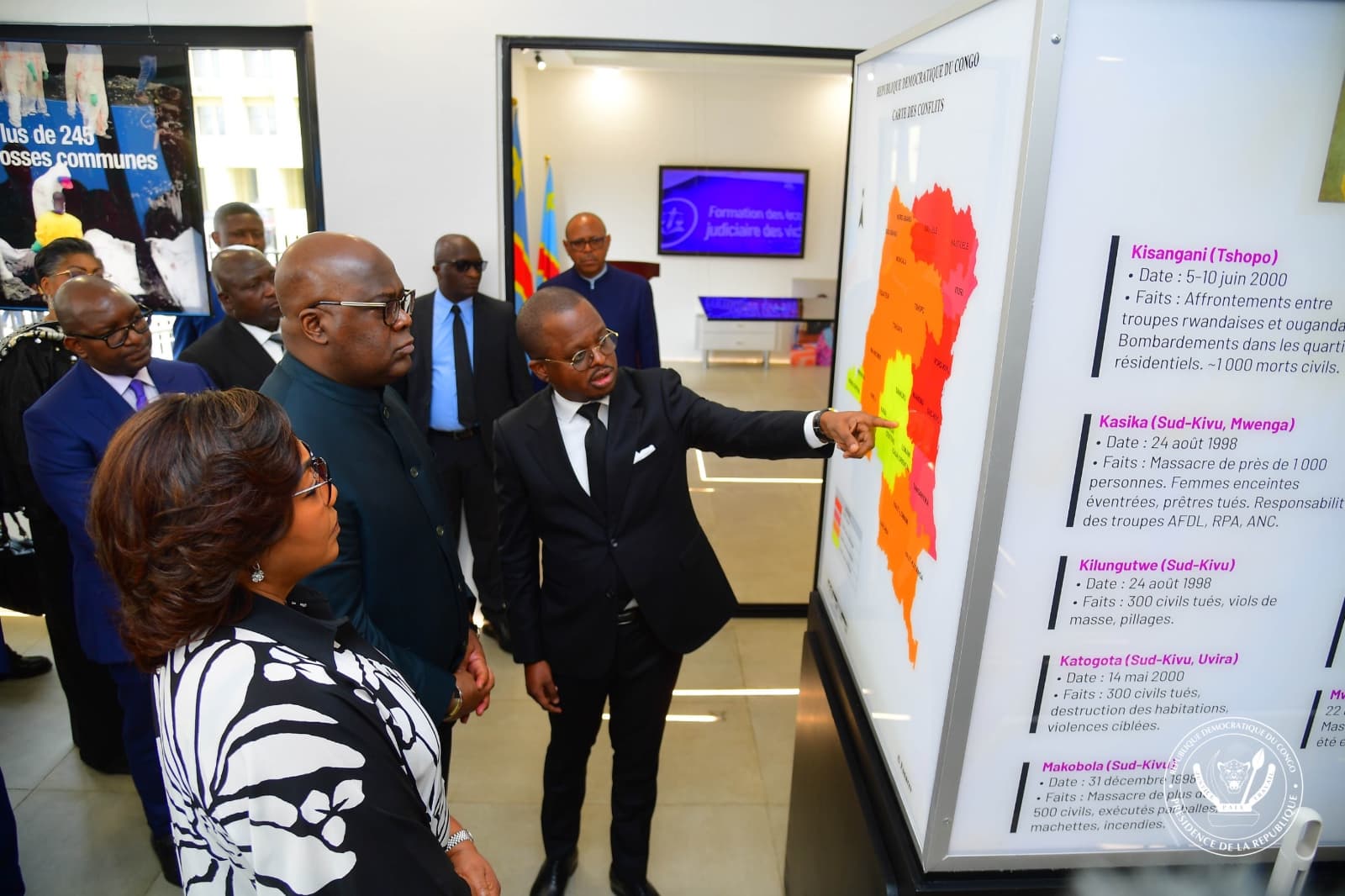
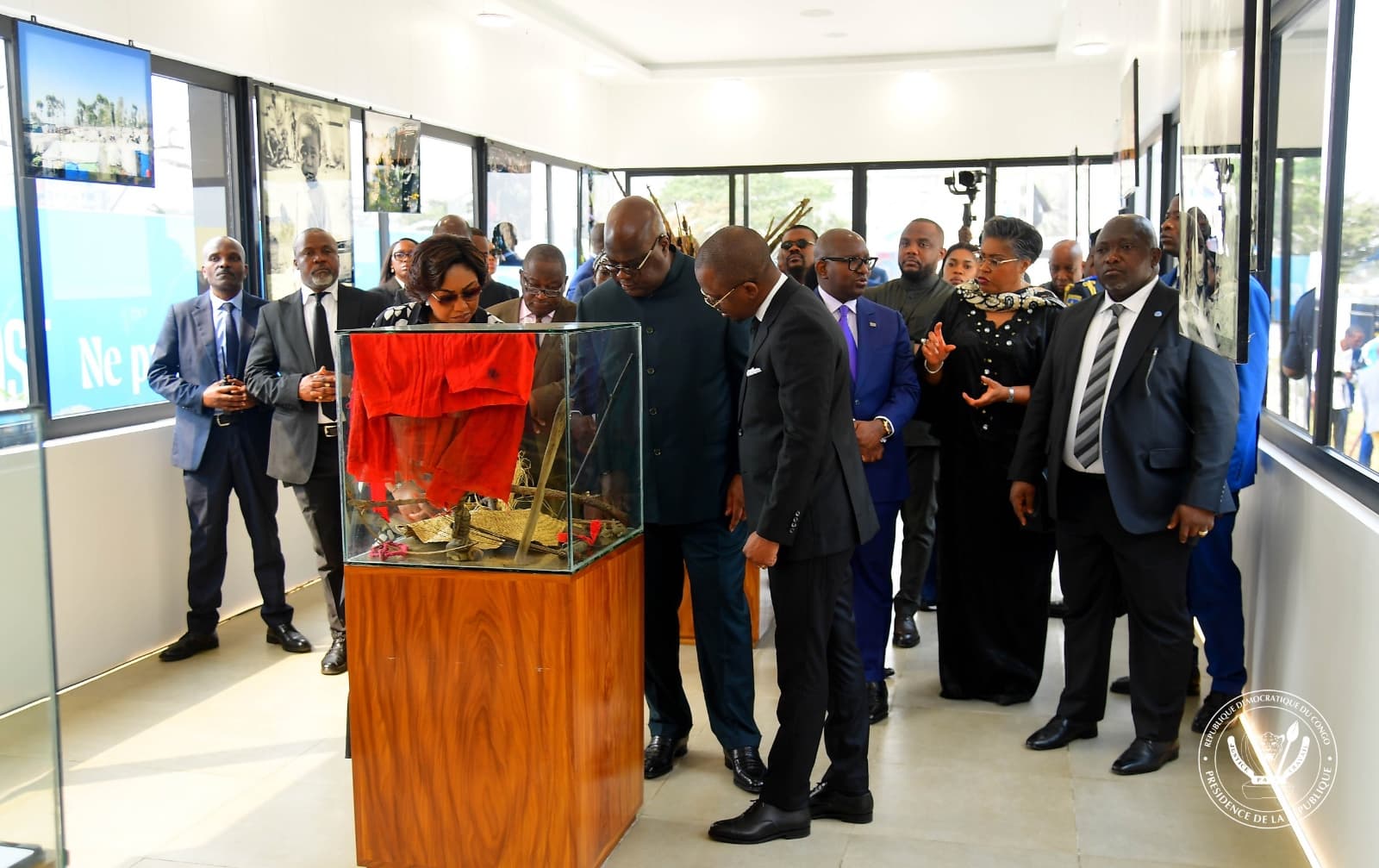
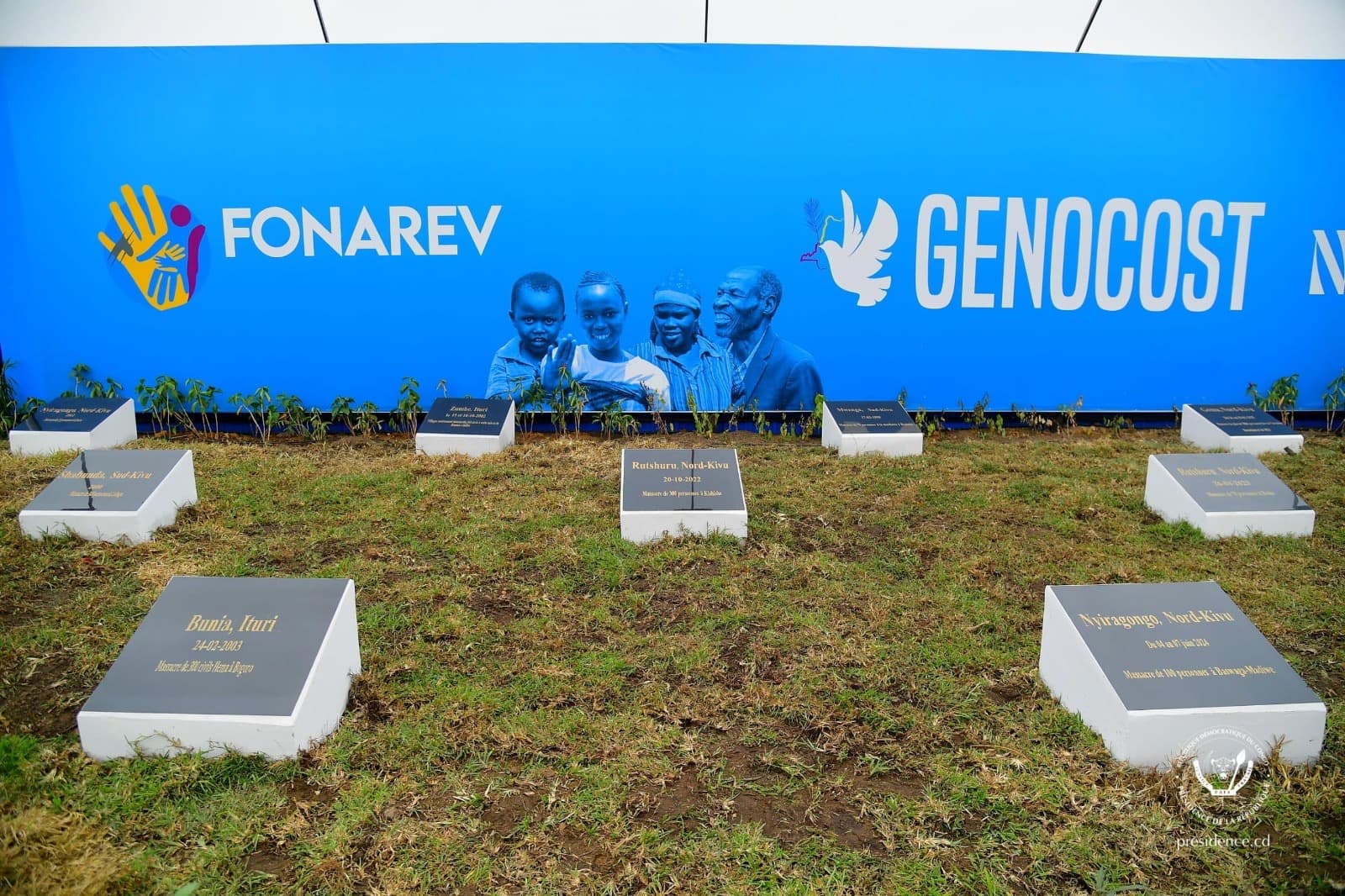
GENOCOST Memorial · 2 August 2025
In plain terms
Imagine a large piggy bank. People are told: 'Put some money in — it's for the war victims in the DRC.' The piggy bank fills up: $212 million.
Now imagine that most of it is used to organise conferences and build monuments. In the end, the victims receive less than 2.5 cents for every dollar raised.
This is FONAREV. A government fund created by presidential decree in 2022. The founders of the term 'Genocost', CAYP, called it a 'farce' in June 2026.
The facts
Not an independent body
FONAREV is under the direct control of the Congolese Ministry of Human Rights — it is not an independent body.
Less than 2.5% to victims
Of the more than $212 million collected in 2024–2025, less than 2.5% was distributed to identified victims.
$1.6M for one ceremony
Over $1.6 million spent for the single inauguration ceremony on August 2, 2025.
Complaint filed in Brussels
Complaint filed in Brussels in September 2025 against the Tshisekedi family for embezzlement of FONAREV funds.
The term's founders call it a farce
CAYP — founders of the term 'genocost' — denounce FONAREV as a 'farce' (June 2026).
What is GENOCOST?

We shouldn't talk about the genocide of the Congolese, it doesn't exist.
— Patrick Fata, Director General of FONAREV
In plain terms
The word 'genocost' was coined in 2013 in a London apartment by Congolese activists in the diaspora. This is not a legal ruling. It is a neologism.
Imagine two children in a schoolyard. One has been hit — those responsible have been punished. That's settled. The other says: 'I've been hit too — we're the same.' Without proof. Without an investigation.
The word 'genocide' has a precise definition. Using it without meeting its criteria does not honour the victims — it weakens the protection of all victims of genocide worldwide.
The facts
A made-up word, with no legal basis
Term coined in 2013 by CAYP, the Congolese diaspora in London. No basis in international law.
The law requires proven intent
The 1948 UN Convention requires dolus specialis — the specific intent to destroy a protected group. No international tribunal has established this for the DRC.
No one agrees on the start date
Conflicting start dates: 1885–1908 — colonial exploitation and mass violence (FONAREV), 1993 (FONAREV), 1996 (Lebrun), 1998 (CAYP). Temporal imprecision is fatal in criminal law.
The cited report is not a verdict
The UN Mapping Report (2010) — cited as a basis — calls for an investigation. It is not a verdict.
An inverted ethnic framing
First FONAREV definition: 'massacres of Bantu people by Tutsi'. Ethnic framing that reproduces and reverses the logic of the 1994 Genocide against the Tutsi in Rwanda.
“Bantu” is not an ethnicity
Scientifically, 'Bantu' is a linguistic classification, not an ethnic one. Kinyarwanda — spoken in Rwanda and by Congolese Tutsi — also belongs to the Bantu language family. Used literally, 'genocide against the Bantu' would therefore include Rwandans and Congolese Tutsi themselves.
An “economic genocide” that does not exist
Second FONAREV definition: 'a genocide perpetrated for economic gain'. Under this conception, deaths in the DRC result from economic predation that sacrifices human life for material interests.
The director general's own admission
Patrick Fata (Director General of FONAREV): 'We shouldn't talk about the genocide of the Congolese, it doesn't exist.'
7 claims · 7 truths
Read each claim on the left, then the factual answer.
Why the right words honour the true victims
A government that protects perpetrators and seeks to shield a convicted person from international justice destroys its own moral credibility.
In plain terms
If your kitchen burns down, the police call it arson. That precise word triggers laws, courts, and real help. If someone calls it all-out war on families, no one can intervene.
The word 'genocide' works in this way. Its precision triggers specific legal obligations. Diluting it does not serve the victims — it deprives them of protection.
The Lumbala trial in Paris (December 2025) proves that justice for crimes in the DRC is now possible — without an unrecognised concept, thanks to universal jurisdiction.
The facts
The word creates legal obligations
The word 'genocide' creates specific obligations under the 1948 Convention. Diluting it weakens them for all victims of genocide worldwide.
Crimes now prosecutable
Crimes against humanity and war crimes are now prosecutable. The Lumbala trial (Paris, Dec. 2025) demonstrated this.
Figures that contradict each other
The inflation of the figures (3 to 15 million) undermines the credibility of all claims, including the most legitimate ones.
Two convictions, one silence
Bemba (Deputy Prime Minister): leader of a militia condemned by the ICC. Lumbala: sentenced in Paris in December 2025. Kinshasa had requested his extradition.
A moral credibility undermined
A government that protects perpetrators and seeks to shield a convicted person from international justice destroys its own moral credibility.
The particularities of the term 'Genocost'
A genocide perpetrated for economic gain.
— FONAREV's own definition
In plain terms
According to FONAREV, the term 'Geno-cost' designates a genocide perpetrated for economic gain. This concept emphasises the idea that the violence ravaging Congolese territory is not the product of fatality or spontaneous hatred, but the result of economic and financial predation that sacrifices human life.
The facts
Perpetrators, not an occupier
In the case of the genocide against Jews, the perpetrators were the Nazis, targeting a distinct population — with no organised support from Jews themselves. In the DRC, by contrast, many crimes are committed by Congolese against other Congolese.
A documented internal complicity
Rapes perpetrated by Congolese against Congolese women are regularly documented. Congolese participate in or become complicit in the destruction of their own population, notably through systematic pillaging of the country's wealth.
Resources diverted from the people
This predation deprives the population of considerable resources that could have been devoted to fighting poverty, disease, and the consequences of environmental mismanagement.
A colonial history left out
The thousands of deaths resulting from economic exploitation of the DRC by colonial powers or international corporations are well documented. The 'Genocost' concept does not account for them and focuses on a period of approximately thirty years.
Key point
There is no questioning of the need to establish accountability for crimes committed in the DRC. However, the use of the concept of 'Genocost' remains controversial: it is legally imprecise and is instrumentalised for political purposes, notably to implicate Rwanda. This concept tends to blur the distinction between the genocide against the Tutsi in Rwanda — established in international law — and crimes or conflicts that have not received this qualification. It is also presented as an instrumentalisation of victims of violence in the DRC aimed at denying or relativising the genocide against the Tutsi in Rwanda.
$212M raised. Less than 2.5% reached victims. The facts deserve honest words.
This project
GenocostExposed is an independent documentation project, not affiliated with any government, political party, or advocacy organisation. It documents FONAREV's claims against financial investigations, international law, and verified primary sources.
Our method
Every claim is sourced to primary documents — financial investigation reports, UN resolutions, international court records. Where the record is incomplete, we say so.